
Metals And Mining Review


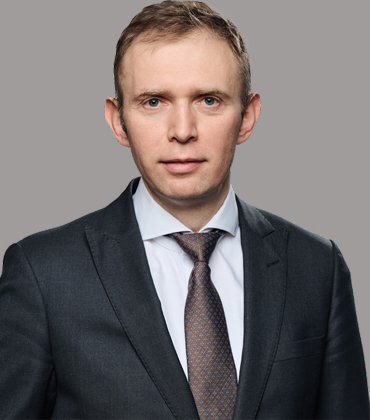 Vitaly Busko, Vice President of Innovation
Nornickel, the largest palladium and nickel producer in the world, is advancing sustainable mining practices through strategic investments in best-in-class technologies. It also produces copper, platinum, cobalt, rhodium, silver, gold, iridium, ruthenium, selenium, tellurium and sulphur.
“We instill confidence in the future through our agility in adapting to evolving industry needs with a strong focus on sustainability and innovation,” says Vitaly Busko, vice president of innovation.
Algorithms at Work in the Mine
In an industry where quality and reliability are non-negotiable, clients turn to Nornickel because every shipment reflects uncompromising standards. It collaborates with them as a technology partner to develop solutions aligned with their long-term business strategies—an approach that deepens loyalty and reinforces lasting relationships.
Vertical integration ensures consistency, with each stage of extraction, processing and delivery under Nornickel’s direct control. Employing AI across its key production and logistics processes, it turns data into decisions, enhancing operational efficiency and supply chain transparency.
Since Nornickel began AI implementation three years ago, operational improvements have translated into annual revenue gains exceeding $100 million. In ore beneficiation, AI systems analyze real-time sensor data to stabilize processes, reduce metal losses and optimize energy consumption. Flotation plants, for instance, leverage AI algorithms to precisely control reagent dosing, airflow and pulp density beyond human capability, resulting in maximized metal recovery rates and improved product quality.
Nornickel’s AI integration strategy has progressed from isolated pilot projects to full-scale digital transformation, integrating machine learning, computer vision and digital assistants across every stage of production.
Smelting operations have also been reshaped. AI systems control temperature regimes and chemical reactions to create stability across processes that once fluctuated with human experience. In mines, autonomous drilling and blasting solutions model rock conditions and guide rig positioning with pinpoint accuracy, reducing waste and raising ore yield.
-
We instill confidence in the future through our agility in adapting to evolving industry needs with a strong focus on sustainability and innovation.
Nornickel’s AI integration strategy has progressed from isolated pilot projects to full-scale digital transformation, integrating machine learning, computer vision and digital assistants across every stage of production.
Nearly 70 percent of its core production processes are now supported by predictive AI. The company is preparing for the next leap with domain-specific multimodal language models, designed to accelerate office workflows, streamline reporting and give employees more time to focus on high-value tasks.
Optimizing Operations in Extreme Environments
Sufficiently supplied spare parts are lifelines in remote Arctic facilities, where winter storms can sever supply routes for weeks. Traditional supply chains make every delay costly. Nornickel eliminates this risk through additive manufacturing. With 3D printing capabilities installed on-site, critical components are produced within hours instead of weeks, keeping operations moving even under extreme conditions.
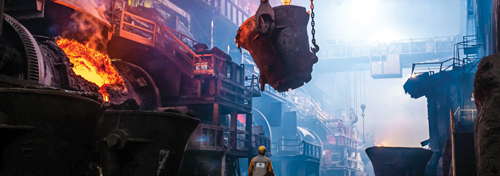 Its digital parts library allows rapid reproduction of optimized designs using advanced materials and post-processing. This reduces downtime, cuts costs and strengthens resilience across the production chain.
Computer modeling amplifies the impact. Digital twins of complex equipment like melting furnaces enable engineers to simulate different operating scenarios and test efficiency gains before implementing changes on the ground. In flotation machines, modeling helped redesign aeration units, increasing nickel and copper recovery by several percentage points.
These advances are not hypothetical. Air hubs created through 3D printing have already passed industrial tests, confirming simulation results in live conditions. Together, additive manufacturing and modeling represent a new era of industrial resilience, where ingenuity reduces vulnerability and operations thrive in the harshest landscapes.
Shaping Long-Term Palladium Demand
Creating entirely new markets for mined metals is rare, yet Nornickel has made it a defining ambition to develop new, sustainable demand for palladium through its Palladium Center.
The Palladium Center is not an auxiliary initiative; it is a blueprint for how a metals producer can actively shape global markets rather than simply serve them. By leading development from laboratory to commercialization, Nornickel is ensuring that palladium remains essential to the technologies of tomorrow.
“Our target is to develop 100 new palladium-based materials by 2030,” says Busko.
Its portfolio already comprises 25 products, many of them with transformative potential. Catalysts for hydrogen electrolyzers and fuel cells are undergoing successful trials with leading Chinese manufacturers. In water treatment, palladium-based electrodes have delivered an 18 percent reduction in energy use during industrial operation. Palladium alloys are cutting operational material costs in fiberglass production by as much as 25 percent.
Leveraging AI, Nornickel models the structure of new materials like alloys, thin nanolayers, 2D materials and quantum dots. Predictive simulations allow researchers to focus only on the most promising options, accelerating breakthroughs in energy systems, microelectronics and spintronics. These innovations promise more durable components, higher energy efficiency and more sustainable industrial processes.
A blend of tradition and reinvention defines Nornickel’s path forward. The company remains the world’s most reliable supplier of palladium and nickel, but its true distinction lies in how it combines that heritage with a relentless push into new technologies and markets.
AI has made production more innovative, efficient and sustainable. Additive manufacturing and digital modeling have built resilience into supply chains that span some of the world’s most challenging geographies. The Palladium Center has created a platform for entirely new industries, ensuring long-term demand for metals that will drive the energy transition.
Commercialization is structured for speed. A hybrid model combines world-class external expertise with its growing center of excellence. Promising technologies are scaled through partnerships and licensing agreements, enabling rapid market entry.
What ties these advances together is a philosophy of partnership. Customers not only trust the unparalleled quality and consistency of its metals but also value its commitment to advancing their future ambitions through strategic investments in best-in-class technologies.
Nornickel mines not only today's resources but also tomorrow's possibilities—building confidence, creating new markets and redefining mining operations in a world of ongoing transformation.
Selecting Reliable Palladium and Nickel Supply for Advanced Industrial Demand
Global industries that depend on palladium and nickel face a strategic procurement challenge that extends far beyond commodity pricing. Automotive electrification, hydrogen technologies, advanced electronics and catalytic applications increasingly depend on metals whose purity, consistency and long-term availability determine the viability of downstream manufacturing programs. Executives responsible for sourcing these materials must evaluate producers not only on resource scale but on their ability to deliver dependable supply, transparent production practices and the technical collaboration needed to support evolving industrial applications.
Quality stability remains the most fundamental expectation in this market. Catalysts, battery components and specialty alloys require metals with tightly controlled chemical properties. Variability in refining processes can introduce subtle differences that cascade through manufacturing lines, forcing costly recalibration or product redesign. Producers capable of maintaining consistent metallurgical standards across extraction, processing and refining therefore provide a measurable advantage for manufacturers that rely on predictable performance in high-precision environments.
Supply reliability forms a second decisive factor. Many palladium and nickel deposits are located in remote regions where logistics disruptions, equipment downtime or infrastructure limitations can interrupt production. Mining companies that maintain close oversight of the full production chain are better positioned to manage these risks and maintain steady delivery commitments. Vertical integration across mining, processing and logistics creates stronger visibility into production flows and enables faster response to unexpected fluctuations in ore quality, transportation conditions or equipment performance.
Technological sophistication has also become increasingly important in modern mining operations. Large-scale metal producers now employ advanced digital tools to monitor extraction, processing and refining activities in real time. Data-driven process control can stabilize metallurgical reactions, reduce material losses and optimize energy consumption, all of which influence the final quality and availability of refined metals. Artificial intelligence systems that analyze sensor data throughout beneficiation and metallurgy stages can detect inefficiencies that human operators might overlook, enabling more consistent production outcomes while improving resource efficiency.
Industrial buyers increasingly expect producers to engage as technical collaborators rather than simple suppliers. Demand for palladium in hydrogen technologies, water treatment and advanced chemical processes continues to expand, requiring close cooperation between metal producers, technology developers and manufacturing partners. Producers that actively invest in research partnerships and application development help accelerate the commercial adoption of new materials and create a more stable long-term market for these metals.
Sustainability commitments also influence procurement decisions. Automotive manufacturers, electronics producers and energy companies now face regulatory and investor pressure to ensure responsible sourcing throughout their supply chains. Mining companies able to demonstrate continuous investment in cleaner technologies, efficiency improvements and responsible resource management provide downstream manufacturers with greater confidence that their material inputs align with evolving environmental expectations.
Within this environment, Nornickel represents a compelling option for organizations requiring dependable palladium and nickel supply. It maintains tight control over its production chain while integrating artificial intelligence across beneficiation, metallurgy and logistics processes to stabilize production and improve resource efficiency. Data-driven control systems analyze sensor inputs to optimize flotation parameters, regulate metallurgical reactions and improve metal recovery. The company complements this technological foundation with additive manufacturing capabilities that allow critical spare parts to be produced directly at remote mining sites, reducing downtime and strengthening supply continuity. Research initiatives such as the Palladium Center extend its role beyond production by developing new palladium-based materials and commercial applications in partnership with global manufacturers, positioning it as a long-term technology partner for industries that depend on these strategic metals.
...Read more
Company
Nornickel
Management
Vitaly Busko, Vice President of Innovation
Description
Nornickel is a global leader in mining and metallurgy, and one of the world’s largest producers of high-grade nickel and palladium. With a strong focus on innovation and sustainability, it fosters long-term customer relationships. The company integrates advanced technologies and materials research to enhance efficiency and resilience across its operations.