
Metals And Mining Review


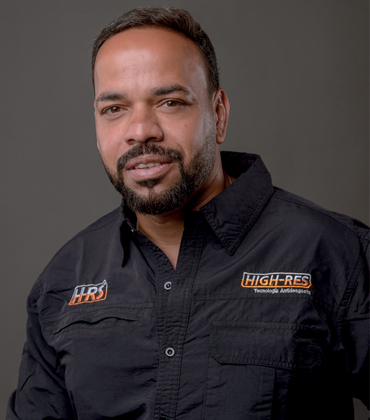 Rodrigo Díaz, Director and Founder
In the rugged landscapes of Latin America’s mining sector, where equipment endures relentless abrasion and impact, High-Res Ltda. is addressing one of mining’s most persistent and costly challenges. Led by its director and founder, Rodrigo Díaz, the company offers advanced anti-wear solutions for large-scale operations.
What differentiates High-Res from its contemporaries, however, is its ability to customize these solutions. The company understands that every mining operation has unique requirements, from material properties to safety protocols. In response, High-Res tailors its offerings through an engineering-driven model, in which solutions are conceived, designed, and validated under real conditions in active mining sites. This customization delivers tangible outcomes, such as reduced downtime, in an industry where interruptions can cost millions.
“We treat wear not as an isolated issue but as a systemic challenge that affects availability, cost structures, and risk exposure,” says Díaz.
Proprietary Engineering for Extreme Wear
What technologies does High-Res use to combat abrasion, impact, and corrosion wear
Central to High-Res’s offerings are cutting-edge technologies that combat wear from abrasion, impact, and corrosion. These are driven by considerable investments in R&D, proprietary engineering, and hybrid manufacturing processes, and are enhanced by strategic alliances such as the one with Vulcaflex for co-developing advanced materials. Integrating tools such as 3D scanning, Discrete Element Method (DEM) simulations, laser applications, Plasma Transferred Arc (PTA) welding, and hybrid ferrous-non-ferrous composites, the firm optimizes geometries, thicknesses, and modularity. These innovations not just increase durability but streamline maintenance, reflecting Díaz’s vision of blending conventional and custom tech for superior performance.
Validation under extreme conditions is non-negotiable. Laboratory tests simulate accelerated stresses, while real-world deployment in active mines provides the ultimate proof. Prototypes are monitored amid constant material flows and heavy loads, yielding data-driven refinements.
Post-implementation, High-Res’s commitment persists through ongoing technical support. Díaz’s teams analyze wear patterns and operational data to generate insights for further optimization. This proactive stance builds trust and drives profitability, aligning with his belief that “profitability and safety go hand in hand.” Internal capabilities amplify this agility. A multidisciplinary in-house team—fusing mining expertise with wear science—enables rapid prototyping and seamless integration across design, engineering, and manufacturing. Such synergy allows High-Res to deliver customized solutions swiftly, without sacrificing quality.
-
We treat wear not as an isolated issue but as a systemic challenge that affects availability, cost structures, and risk exposure.
Post-implementation, High-Res’s commitment persists through ongoing technical support. Díaz’s teams analyze wear patterns and operational data to generate insights for further optimization. This proactive stance builds trust and drives profitability, aligning with his belief that “profitability and safety go hand in hand.” Internal capabilities amplify this agility. A multidisciplinary in-house team—fusing mining expertise with wear science—enables rapid prototyping and seamless integration across design, engineering, and manufacturing. Such synergy allows High-Res to deliver customized solutions swiftly, without sacrificing quality.
How have advances in materials science influenced modern wear-resistant mining solutions
Advances in materials science have profoundly shaped Díaz’s work. Metallurgical innovations, 3D image analysis, DEM, and laser processes have birthed hybrid solutions that outperform predecessors. High-Res’s proprietary technologies, informed by extensive research and field data, differentiate the firm in a competitive landscape. Díaz views these developments as the cornerstone of sustainable mining, where extended service life translates to lower environmental footprints through reduced resource consumption.
A Partner for the Future of Latin American Mining
What results have mining operators achieved through High-Res engineered wear solutions
A standout success illustrates High-Res’s impact. At Codelco’s Chuquicamata Underground Mine, Díaz's team tackled premature wear in critical feeders. A hybrid lining system tripled component longevity, processing 4 million tons versus the prior 1.3 million, slashing maintenance shutdowns and dust exposure. Collaborating with leaders like Leopoldo Jauriat and Rodrigo Madrid, this project enhanced availability, cut costs, and elevated safety—now replicated across Chile and Peru, including at BHP Escondida and Grupo México's Cuajone.
High-Res’s flagship Borracheiras plates exemplify its innovative edge. These rubber-based load guides eliminate spillage and abrasion on conveyor belts, achieving two to four times the performance of traditional options. Adopted by major operators, they highlight High-Res's expansion into metallic and non-metallic components for diverse processes.
Moving forward, Díaz envisions High-Res as a catalyst for the evolution of Latin American mining. Founded on engineering ingenuity and client collaboration, the company pursues relentless improvement to address emerging challenges such as automation and decarbonization. With High-Res, wear resistance is not just a service—it is a strategic imperative for the industry’s future.
Engineering-Led Anti-Wear Solutions for Modern Mining
Wear remains one of the most persistent cost drivers in large-scale mining operations. Transfer chutes, feeders and conveying systems face constant abrasion, impact and corrosion as millions of tonnes of material move through processing circuits each year. Component failure in these areas rarely appears dramatic, yet its cumulative effect is significant: frequent shutdowns, rising maintenance intervals and lost throughput. Executives responsible for mining equipment procurement increasingly recognize that anti-wear solutions must extend beyond commodity liners or replacement parts. Sustainable performance depends on engineering approaches that account for real operating conditions inside the plant.
The most credible providers treat wear as a system problem rather than a product issue. Abrasion and impact patterns vary according to ore characteristics, transfer geometry and material velocity. Effective solutions begin with an analytical understanding of these variables and translate that understanding into tailored component design. Digital modelling tools such as 3D scanning and discrete element simulation have become valuable in this process, allowing engineers to study material flow and identify points where wear accelerates. Design improvements often emerge through adjustments in geometry, thickness or attachment systems rather than simply substituting harder materials.
Material science also plays a decisive role, though its value appears when combined with applied engineering rather than isolated experimentation. Mining operations increasingly expect anti-wear suppliers to integrate metallic and non-metallic materials into hybrid solutions suited to each application. Laboratory testing can simulate abrasion and impact under controlled conditions, yet its conclusions gain credibility only when validated in active mines. Deploying prototypes under full production loads provides insight into real degradation patterns, enabling refinements that laboratory testing alone cannot reveal.
Long-term performance verification further distinguishes mature providers from commodity vendors. Mines require evidence that installed solutions deliver measurable improvements in component life and maintenance frequency. Continuous monitoring of wear rates, maintenance intervals and throughput performance allows suppliers to confirm projections with operational data. When that data demonstrates longer service life, fewer shutdowns and improved safety conditions, procurement teams gain the confidence to standardize those solutions across multiple assets or sites.
Mining organizations also value partners capable of responding quickly to site-specific requirements. Integrated design, engineering and fabrication capabilities shorten development cycles and allow new components to move from concept to installation without extended delays. Internal expertise in metallurgy, fabrication and wear analysis supports faster adaptation when ore characteristics or process conditions change.
HIGH-RES provides a clear example of this engineering-driven approach. The Chile-based company designs anti-wear systems by combining digital modelling tools, laboratory research and field validation in operating mines. Its engineering team integrates ferrous and non-ferrous materials through proprietary fabrication processes and analyzes wear patterns with 3D scanning and discrete element modelling to refine component geometry and anchoring systems.
The company’s BORRACHEIRAS guide plates illustrate this methodology. Developed for transfer chute applications, the design employs specialized rubber compounds that maintain constant contact with conveyor components, reducing spillage and abrasion. Field deployment at Codelco’s Chuquicamata underground operation replaced conventional plates and extended component life from roughly 1.3 million tonnes to approximately 4 million tonnes processed while reducing maintenance frequency.
Continued monitoring of wear rates and operational data allows the company to refine its solutions and confirm performance in real mining environments. For organizations pursuing reliable anti-wear performance in demanding mineral processing systems, HIGH-RES demonstrates the analytical rigor and field validation that define a leading solution provider.
...Read more
Company
High-Res Ltda.
Management
Rodrigo Díaz, Director and Founder
Description
High-Res Ltda. is a Chilean engineering company specializing in customized anti-wear solutions for large-scale mining, combining advanced materials science, proprietary design, and field-validated performance to extend equipment life, improve safety, and reduce operational downtime.