
THANK YOU FOR SUBSCRIBING
Metals And Mining Review: Specials Magazine
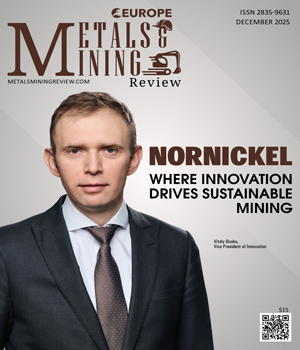
Nornickel
Where Innovation Drives Sustainable Mining
Nickel and palladium mining have powered critical industries like automotive and electronics manufacturing for centuries. The global push for sustainability, along with increased demand, is driving the adoption of newer, cleaner methods to retrieve these essential metals. Nornickel, the largest palladium and nickel producer in the world, is advancing sustainable mining practices through strategic investments in best-in-class technologies. It also produces copper, platinum, cobalt, rhodium, silver, gold, iridium, ruthenium, selenium, tellurium and sulphur. “We instill confidence in the future through our agility in adapting to evolving industry needs with a strong focus on sustainability and innovation,” says Vitaly Busko, vice president of innovation. Algorithms at Work in the Mine In an industry where quality and reliability are non-negotiable, clients turn to Nornickel because every shipment reflects uncompromising standards. It collaborates with them as a technology partner to develop solutions aligned with their long-term business strategies—an approach that deepens loyalty and reinforces lasting relationships. Vertical integration ensures consistency, with each stage of extraction, processing and delivery under Nornickel’s direct control. Employing AI across its key production and logistics processes, it turns data into decisions, enhancing operational efficiency and supply chain transparency. Since Nornickel began AI implementation three years ago, operational improvements have translated into annual revenue gains exceeding $100 million. In ore beneficiation, AI systems analyze real-time sensor data to stabilize processes, reduce metal losses and optimize energy consumption. Flotation plants, for instance, leverage AI algorithms to precisely control reagent dosing, airflow and pulp density beyond human capability, resulting in maximized metal recovery rates and improved product quality. Smelting operations have also been reshaped. AI systems control temperature regimes and chemical reactions to create stability across processes that once fluctuated with human experience. In mines, autonomous drilling and blasting solutions model rock conditions and guide rig positioning with pinpoint accuracy, reducing waste and raising ore yield. Nornickel’s AI integration strategy has progressed from isolated pilot projects to full-scale digital transformation, integrating machine learning, computer vision and digital assistants across every stage of production....Read more
Aluminum and Steel
Novelis UK
Advancing Circular Economy with Best-in-Class Aluminium Recycling
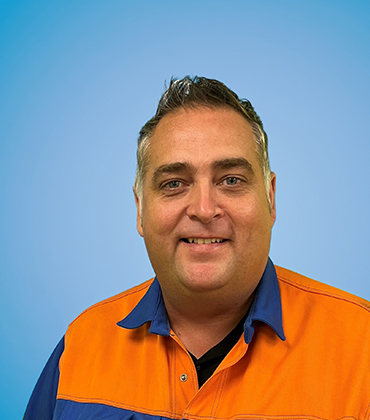
Allan Sweeney, Plant Manager
Aluminium’s ability to be recycled indefinitely while retaining its properties has made it central to the circular economy. In the UK, billions of used beverage cans move through this regenerative loop each year. Novelis strengthens this system with advanced technologies, high-quality processing and decades of expertise, delivering low-carbon aluminium for new beverage cans and automotive components. The largest recyclers of aluminium in the UK and the second largest in Europe, Novelis UK has helped close the loop between consumption and giving aluminium a new life for over two decades. At its Latchford facility in Warrington, the company processes a steady flow of used beverage cans and automotive press-shop scrap, sending multiple loads of ingots daily for rolling across its value chain. “We have been developing and honing our operations and customer services,” says Allan Sweeney, plant manager. “Our customer loyalty has been built on years of trust, efficiency and an unrelenting commitment to circularity.” To support the growing demand for high-quality, high-recycled aluminium, Novelis has made a significant investment at Latchford to increase its used beverage can recycling capacity. Once complete, the site will process up to 195,000 tonnes of aluminium annually—equivalent to more than 20 billion cans. This expansion will enable the company to recycle every beverage can collected in the UK and support the upcoming deposit return scheme, a key national initiative to promote recycling and resource recovery. Quality control and sustainability guide every stage of the recycling process. Materials are sourced responsibly through European deposit return schemes, trusted suppliers and local authorities, ensuring full traceability. Inside the plant, advanced X-ray transmission, laser-induced breakdown spectroscopy and AI-driven sorting systems separate alloys with precision, producing consistent, high-grade feedstock for new cans, automotive panels and construction applications. Its Latchford facility also supports closed-loop recycling for major automotive manufacturers by processing pre-consumer press-shop scrap and returning it as high-performance aluminium sheet. This approach strengthens supply security, reduces waste and advances the decarbonisation of the mobility sector. ...Read more
Stainless Steel
Recycling -The True Pathway Towards a Circular Aluminium Industry
Serge Gaudin, Director Automotive Operations, Sierre&Nachterstedt, Novelis
Palladium and Nickel
Green Transformation Reshapes The Steel Industry Worldwide
Dr. Alexander Fleischanderl, Chief Technology Officer, Primetals Technologies
Technology and Software
Metallurgically Formed Niobium Carbide Composites for Corrosion, Erosion and Wear Protection
Leo Antony, Director of Technology, Advanced Metallic Coatings, Kymera International ( NASDAQ: KYMR )
Finance Services
Recycling, Resilience and Regional Strategy: The Three Rs of Automotive Procurement
Gergely Baranyi, Purchasing Director of Raw Materials and Passive Safety Technologies, Nissan Motor Corporation [TYO: 7201]
Palladium and Nickel

Championing Recruitment Success with Strong Talent Pipelines
Jorge O. Miranda, Talent Acquisition Manager, Peabody Energy
Palladium and Nickel

Navigating Cybersecurity in a Rapidly Evolving World
Casper Eloff, Head of Corporate Security, The Mosaic Company
IN MY OPINION
Precious Metals
High-Performance Materials and Processes for Complex Applications with Proven Sustainability
Dr. Andreas Frehn, Director Technology & Innovation and Technical Marketing EMEA, Materion Corporation

LAST WORD
Mining Consulting
Mining Engineering
Garrick Goodheart, Environmental and Engineering Manager, Westmoreland Mining
IN FOCUS
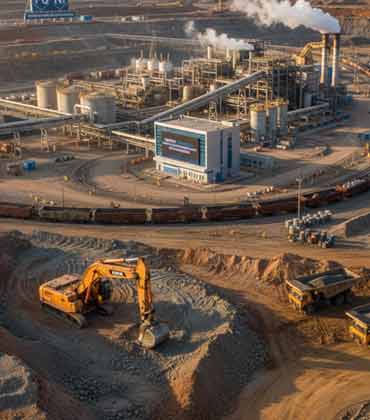
Microservices in Mining: Decoupling Complexity for Palladium and Nickel Production
The European mining sector adopts cloud-native microservices to enhance agility, forecasting accuracy, and sustainability in Palladium and Nickel production, aligning operations with green energy goals.
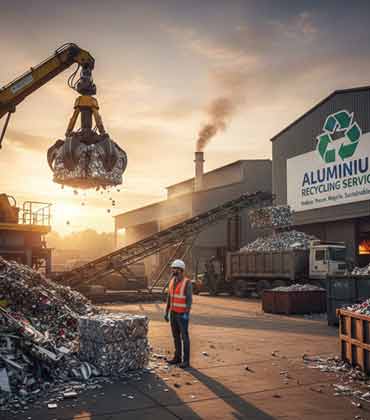
Europe's Transition to Regenerative Aluminium Flows
The European aluminium sector evolves from a commodity to a strategic energy bank, promoting circular-economy practices, sustainable recycling, and decarbonization, while driving industrial growth without increased resource extraction.
EDITORIAL
Driving Europe’s Circular Metals Growth
Europe’s palladium and nickel producers and aluminium recycling sectors saw steady growth in 2025, driven by strong demand from automotive, electronics, and green technologies, as well as regulatory pressures for sustainable materials and emissions control.
Palladium supply and demand remained balanced, with Germany leading both production and recycling efforts due to its advanced industrial infrastructure and automotive manufacturing base. Nickel output also held firm, supporting battery and alloy production, while aluminium recycling expanded with new facilities and upgrades to meet rising demand for low-carbon materials.
However, the markets faced challenges such as global competition for scrap, price volatility, and the need for more efficient recycling technologies. European operators struggled with weaker demand and overcapacity, as Asian buyers offered higher prices for aluminium scrap, diverting valuable resources away from local processors. Regulatory changes, including new EU waste shipment rules, impacted scrap exports and forced companies to adapt procurement strategies.
In response, industry players invested heavily in advanced sorting and processing technologies, expanded recycling capacity, and pursued closer collaboration with manufacturers to ensure material traceability and quality. These measures have strengthened Europe’s strategic autonomy, improved circularity, and helped maintain competitiveness amid shifting global trade patterns and evolving environmental standards.
In this edition, we highlight some of the most influential leaders in the sector. We feature views from Dr Andreas Frehn, director technology & innovation and technical marketing EMEA at Materion Corporation, and Gergely Baranyi, purchasing director of raw materials and passive safety technologies at Nissan Motor Corporation. These leaders share insights on the challenges and opportunities in today's market. We hope their perspectives help you make better and more data-driven business decisions.
