Top Alluvial Gold Mining Equipment Manufacturers in Asia 2026

Alluvial gold mining equipment manufacturers produce systems used to recover gold from riverbeds, placer deposits and sediment-based mining sites. With a focus on recovery efficiency, equipment durability, material handling and field reliability, they support stronger extraction performance and more practical mining operations.

DOVE Equipment & Machinery Co., Ltd.: Engineering the Right Path to Maximum Mineral Recovery
DOVE Equipment & Machinery Co., Ltd.
Engineering the Right Path to Maximum Mineral Recovery
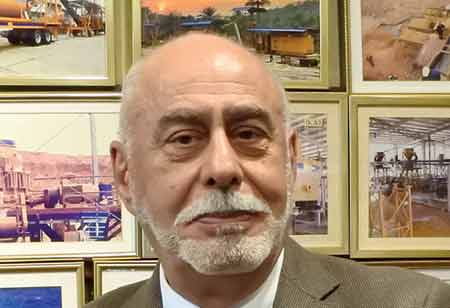
Dr. Fillip Sharifi, CEO
A mine can hold valuable gold and still fail to deliver its value. The problem may lie in what happens after material reaches the surface. If the processing plant is not suited to the material, valuable mineral can be lost before it is recovered.

Alluvial Gold Recovery: Modern Equipment Driving APAC Mining Efficiency

The ability of the equipment to efficiently separate valuable material from sediment, gravel and other naturally occurring material is a critical factor for alluvial gold recovery. The Asia Pacific region's mining landscape is wide-ranging, with some areas having river systems and shallow deposits. In contrast, others have remote conditions that determine the choice of equipment due to access, power usage and water management.

Choosing a Gold Processing Plant Around the Deposit

Alluvial gold projects can lose money before equipment breaks down. The risk begins when a plant is selected before the deposit is understood. Particle size, mineral association, clay content and water conditions can change what a wash plant must do, yet purchasing discussions can still center on throughput and purchase price. A machine may move large volumes without recovering enough gold to justify the capital. For executives approving equipment, the useful question is not simply how much material a plant can process, but how its recovery system fits the actual deposit.

Alluvial Gold Mining Equipment Manufacturers in Asia Info

Q1
What Do Top Alluvial Gold Mining Equipment Manufacturers Provide?
Top Alluvial Gold Mining Equipment Manufacturers design and produce equipment and processing systems used to recover gold from alluvial or placer deposits. These systems typically handle material excavation, washing, screening, classification, concentration and gold recovery. Depending on the deposit and project scale, equipment may be portable, mobile, semi-stationary or stationary. Some systems are also designed for river-based operations where dredging and floating processing are required. The objective is not simply to move more material, but to build a processing route suited to the characteristics of the deposit.
Q2
What Equipment Is Included In Alluvial Gold Mining Systems?
Top Alluvial Gold Mining Equipment Manufacturers can provide complete processing plants as well as individual components. Common equipment includes gold wash plants, trommels, screening and classification systems, gravity concentrators and other recovery equipment. Larger systems may integrate several stages into a coordinated processing circuit. Equipment selection can vary according to feed characteristics, expected throughput, gold particle size, water availability and site conditions. Mobile and portable configurations can also support projects where rapid deployment or limited infrastructure is important.
Q3
Why Is Demand For Alluvial Gold Mining Equipment Growing?
Demand for Top Alluvial Gold Mining Equipment Manufacturers is shaped by continued interest in developing placer deposits and improving recovery from existing operations. Mine operators increasingly need equipment that can accommodate different deposit conditions rather than relying on standardized layouts. Recovery efficiency, water use, mobility and operating practicality can influence investment decisions alongside initial equipment cost. The emphasis on recovering more of the available gold from each deposit also makes deposit characterization and application-specific plant design increasingly relevant when new projects are evaluated.
Q4
How Should Alluvial Gold Mining Equipment Manufacturers Be Evaluated?
Top Alluvial Gold Mining Equipment Manufacturers should be assessed on more than equipment specifications or purchase price. Important considerations include processing capacity, expected recovery performance, ability to handle different particle sizes, equipment configuration and suitability for the actual deposit. Buyers should also examine engineering support, testing capabilities, installation requirements, operator training, maintenance and spare-parts availability. Experience with comparable mining environments can provide additional confidence, particularly where remote locations, variable feed conditions or challenging water requirements affect plant performance.
Q5
How Can Alluvial Gold Processing Equipment Create Greater Mining Value?
Top Alluvial Gold Mining Equipment Manufacturers can create value by aligning processing performance with the material being mined. A plant that processes large volumes but leaves significant recoverable gold in its tailings may deliver weaker economics than a smaller system with better recovery. Proper classification and concentration can help address differences in gold particle size, while suitable water-management systems can support consistent processing. For operators, the more meaningful measure is therefore the amount of saleable gold recovered relative to the capital and operating resources required.
Q6
What Role Does Technology Play In Alluvial Gold Recovery?
Top Alluvial Gold Mining Equipment Manufacturers increasingly combine mechanical processing, gravity concentration, plant engineering and deposit analysis to improve recovery outcomes. Technology can help systems address fine gold, variable feed characteristics and different operating environments. Automation can also simplify plant operation and reduce the level of specialized intervention required during processing. The strongest systems connect equipment design with ore characteristics, site conditions and production objectives, making technical expertise as important as the individual machines within the processing circuit.